Storia/ Dal Neolitico ai Fenici
Dal Neolitico ai Fenici
Pur essendo una terra geologicamente molto antica, la Sardegna fu popolata solo nel periodo neolitico, vale a dire nella tarda età della pietra, da genti venute da lontano che si cibavano dei prodotti spontanei della vegetazione naturale e praticavano anche la caccia e la pesca.
Gli strumenti occorrenti per le loro limitate attività pratiche erano ottenuti dalle schegge della roccia vulcanica detta ossidiana e dall'argilla per la confezione dei rustici recipienti di terracotta. Questi primi insediamenti si verificarono ovviamente in prossimità delle coste, ma da qui i primi abitatori si spostarono nelle zone interne dell'isola dove praticarono la pastorizia e l'agricoltura e costruirono le prime capanne per abitazioni familiari.
Essi avevano una misteriosa religione: veneravano la dea-madre ed il dio-toro, simboli della vita e della fecondità, ma praticavano anche il culto per i morti che riponevano entro grotticelle scavate nella roccia, dette domus de janas.
Antica città di Cornus - Cuglieri
Verso la metà del Il millennio a.C. arrivarono in Sardegna altre genti dall'Oriente, si diffusero in tutta la regione e costruirono con grossi blocchi di pietra in stile megalitico quelle grandiose torri troncoconiche dette Nuraghi in punti elevati e collegate a vista.
Nuraghe Palmavera - Alghero
All'ombra di queste imponenti costruzioni si sviluppò una civiltà di arte, di lavoro, di cultura e di moralità che si distinse nella pastorizia e nell'agricoltura, nell'uso dei metalli e nell'architettura.
Le genti nuragiche praticarono il culto delle acque sorgive nei templi a pozzo e veneravano i loro antenati nelle tombe dei giganti, offrendo alle loro divinità le vivide statuette di bronzo raffiguranti uomini, animali, navicelle e totem, tutti oggetti di notevole valore artistico.
Dopo il Mille a.C. arrivarono nell'isola i Fenici che fondarono alcune città marinare lungo la costa sudoccidentale
per favorire i loro traffici commerciali, attuando con gli indigeni un'attiva e pacifica politica di scambio di merci.
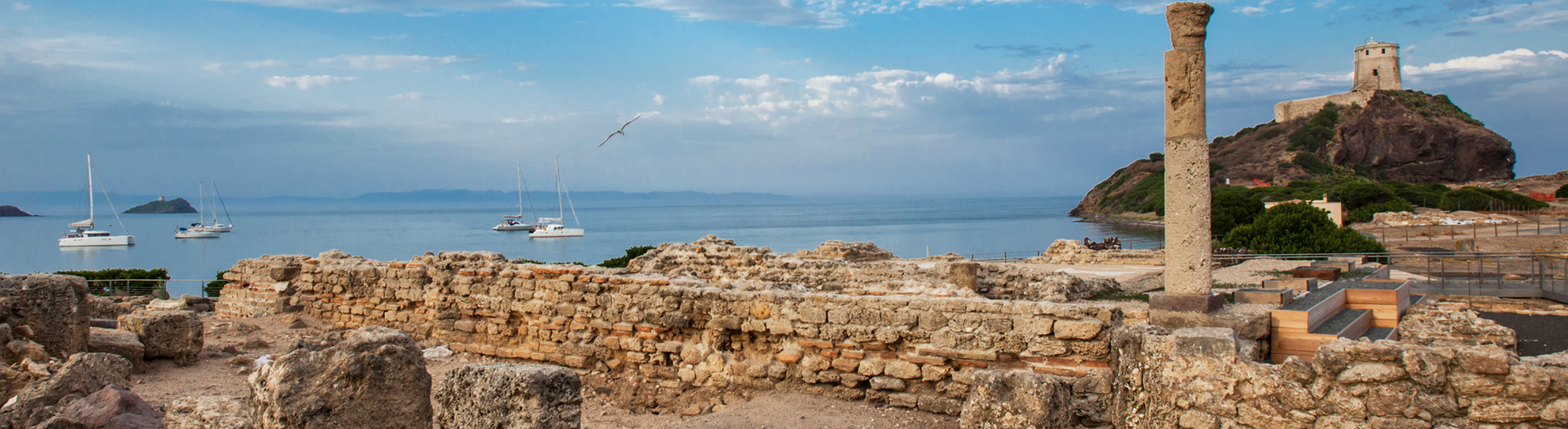
I centri più importanti di questa influenza fenicia furono Nora, Karalis, Sulci, Tharros, Bithia e Cornus
Vedi anche
Invito alla Sardegna
Dal Neolitico ai Fenici
From the Neolithic to the Phoenicians
Although it is a geologically very ancient land, Sardinia was only populated in the Neolithic period, that is, in the late Stone Age, by people who came from far away who fed on the spontaneous products of natural vegetation and also practiced hunting and fishing. The tools needed for their limited practical activities were obtained from the fragments of the volcanic rock called obsidian and from the clay for the construction of rustic terracotta containers.
These first settlements obviously occurred near the coasts, but from here the first inhabitants moved to the interior of the island where they practiced pastoralism and agriculture and built the first huts for family homes. They had a mysterious religion: they venerated the mother goddess and the bull god, symbols of life and fertility, but they also practiced the cult of the dead, whom they placed in small caves dug into the rock, called domus de janas.
Towards the middle of the second millennium BC other people arrived in Sardinia from the East, spread throughout the region and built with large blocks of stone in megalithic style those grandiose truncated cone-shaped towers called Nuraghi at elevated points and connected by sight.
In the shadow of these imposing buildings, a civilization of art, work, culture and morality developed which distinguished itself in pastoralism and agriculture, in the use of metals and in architecture.
The Nuragic people practiced the cult of spring water in well temples and venerated their ancestors in the tombs of giants, offering their deities vivid bronze statuettes depicting men, animals, ships and totems, all objects of notable artistic value.
After 1000 BC, the Phoenicians arrived on the island and founded some maritime cities along the south-western coast to facilitate their commercial traffic, implementing an active and peaceful policy of exchange of goods with the natives. The most important centers of this Phoenician influence were Nora, Karalis, Sulci, Tharros, Bithia and Cornus.
Lavorazione della Pelle